Entering a peloton means much more than following a group of cyclists along a road. It is a dynamic environment where every athlete must be ready to react in a few moments to changes in pace, sudden accelerations, climbs, technical descents and final sprints. Cycling within the group in fact requires a mix of physical and mental qualities that go far beyond simple aerobic endurance. It takes strength to push hard relationships, explosiveness to respond to attacks, stability to maintain control of the bicycle, and cardiovascular capacity to sustain repeated efforts for several hours at a time.
For this reason, more and more cyclists, both professionals and amateurs, are dedicating an important part of their preparation to working in the gym. The idea that cycling is trained exclusively by pedaling is now a thing of the past. Modern athletic training integrates strength exercises, conditioning, functional work, and mobility with the goal of building a more complete, more efficient, and less injury-prone athlete.
The KingsBox equipment allows you to create a gym perfectly suited to the cyclist’s needs. From barbells to kettlebells, from rowing machines to training sleds, each piece of equipment contributes to the development of a specific feature that can translate into a concrete advantage during a race or a long bike ride.
Indice dei contenuti
What is peloton?
In road cycling, the French term peloton identifies the main group of riders. Pedaling very close together, athletes use the aerodynamic wake produced by those in front. This technique allows for a significant reduction in air resistance, allowing for significant energy savings that, during a long race, can make the difference between arriving fresh in the final sprint or completely exhausting your energy.
Staying within the group, however, is not easy. The cyclist must always be focused, maintain minimal distances from other participants, react quickly to group movements, and produce sudden power surges as the pace increases. Continuous acceleration is one of the most challenging aspects of modern cycling and explains why endurance alone is no longer enough.
Why the gym has become essential in modern cycling
For many years, weight work was considered of little use to cyclists. Today the situation has completely changed. Major professional teams regularly introduce strength training throughout the season because it has been shown that a stronger athlete can develop greater power without significantly increasing energy consumption.
Training strength means being able to transfer more energy to the pedals with each pedal stroke. This allows you to tackle climbs more easily, accelerate more quickly and maintain high speeds with a lower perception of fatigue. Additionally, muscle work improves bone density, protects joints, and reduces the risk of numerous overload injuries.
Comprehensive preparation must therefore alternate road trips with structured gym workouts, creating a balance between strength, endurance, and aerobic capacity.
The physical qualities essential for pedaling in the peloton
The modern cyclist must develop several athletic abilities at the same time. Lower limb strength is the basis of all performance, but it alone is not enough. Great cardiovascular efficiency is required to sustain long-hour outings, good explosiveness to tackle sprints, and remarkable trunk stability to maintain a correct position throughout the race.
Joint mobility also plays a fundamental role. Movable ankles and ankles also allow for more efficient pedaling, while good mobility of the spine reduces the lumbar tensions typical of long periods in the saddle.
Finally, work on coordination should not be neglected. A coordinated athlete manages the bike better, takes turns with greater confidence, and maintains a smoother pedaling technique even when fatigue increases.
Why choose KingsBox equipment
One of the main features of the KingsBox equipment is its versatility. With a few tools, it is possible to build a complete program capable of training all the qualities required by cycling. Do not need dozens of isotonic machines: functional tools and proper programming are enough.
Each exercise can be adapted to the athlete’s level, from the beginner who wants to improve their physical fitness to the advanced cyclist who prepares challenging competitions or granfondo.
Recommended equipment to get started
Rower
The rowing machine represents one of the best tools for conditioning the cyclist. It involves over 80% of the body’s musculature while simultaneously improving cardiovascular endurance, coordination, and endurance strength. Interspersed sessions allow you to perfectly simulate the intermittent efforts typical of road races.
For example, a session consisting of 10 repetitions of 500 meters with active recovery develops the ability to maintain high intensities for long periods, also improving recovery between efforts.
Dumbbells
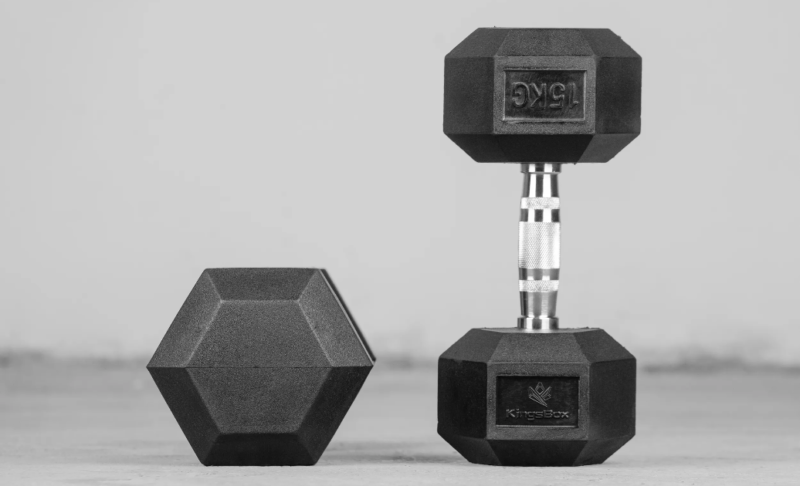
Dumbbells allow you to train your body unilaterally, correcting any imbalances between the right and left limbs. Lunges, step-ups, Bulgarian squats, and single-leg Romanian Deadlifts are extremely effective exercises for improving balance, coordination, and pelvic stability, which are essential elements when pedaling.
Furthermore, dumbbell work involves the stabilizing muscles more than traditional machines, helping to develop superior motor control.
Kettlebell
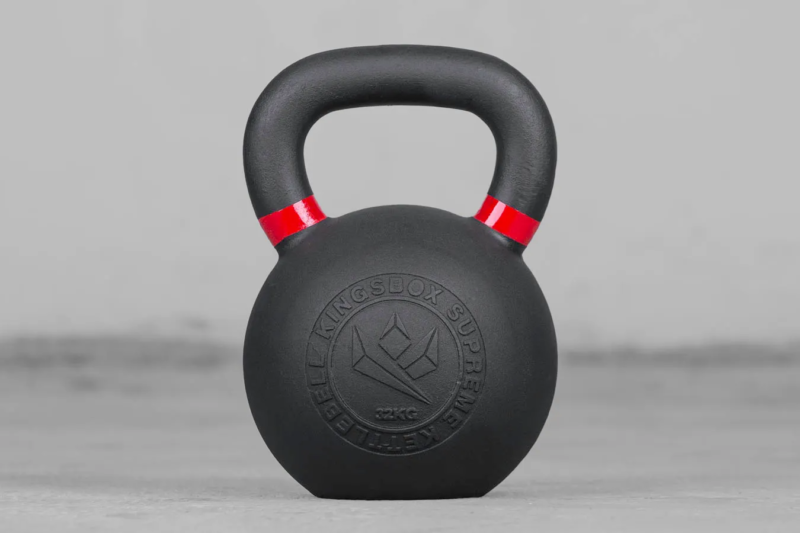
The kettlebell is one of the most comprehensive tools for developing power, endurance and body control. The swing improves explosive hip strength, one of the main drivers of pedaling, while exercises like clean, press, and goblet squat increase the ability to produce force quickly and in a coordinated manner.
Kettlebells also allow you to create very effective metabolic circuits, alternating strength exercises with cardiovascular work without interrupting the pace of training.
Why start with these three tools
Rower, dumbbells, and kettlebells are probably the best starting point for those looking to improve their cycling performance. With these three tools, you can train virtually your entire body by developing strength, endurance, coordination, and cardiovascular ability. Afterwards, it will be possible to expand the gym by inserting barbells, bumpers, sleds and the other professional KingsBox tools to build an even more complete preparation.
Force is the cyclist’s new engine
Training exclusively by pedaling means neglecting a fundamental part of performance. A strong cyclist is not simply more powerful, but it is also more energy-efficient. Each pedal stroke requires a lower percentage of your maximal strength and this saves valuable energy during longer rides. This is precisely why gym preparation has become an integral part of the work of so many top-level athletes.
In the second part of the article, we’ll take a detailed look at how to use barbells, bumpers, medicine balls, slam balls, jump ropes, pull-up bars, plyometric boxes, sleds, and The Rope to build a comprehensive preparation specifically for cycling.
KingsBox tools for developing strength and power in cycling
After building a good foundation of endurance and cardiovascular capacity with rowing machine, dumbbells and kettlebells, the cyclist can introduce more specific tools to increase maximum strength, explosive power and the ability to produce energy at decisive moments of the race. During a peloton competition, in fact, it’s not enough to maintain a constant pace: the result is often decided through sudden accelerations, uphill changes of pace, relaunches after turns, or sprints in the final kilometers.
The goal of training with KingsBox equipment is not to transform the cyclist into a weightlifting athlete, but to build a more efficient physique, capable of expressing more watts, holding out longer, and recovering faster.
Balancer: the basis of the cyclist’s strength
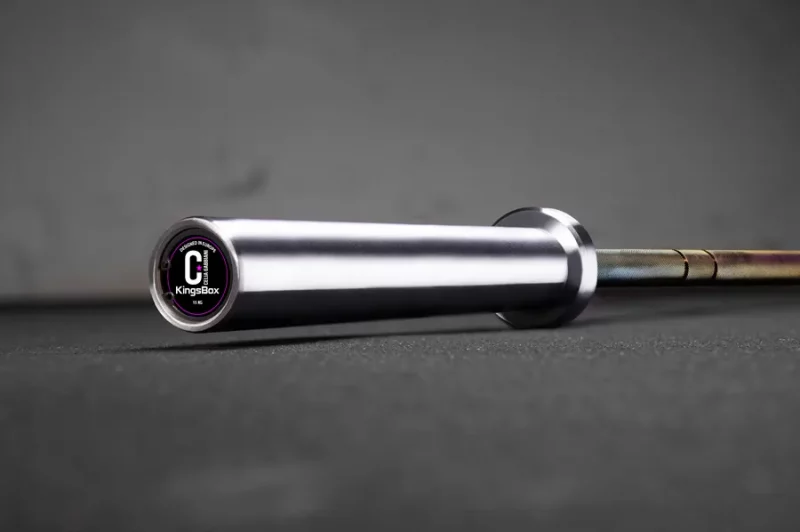
The balance wheel is one of the most important tools for developing a force that can be transferred to the bicycle. Fundamental barbell exercises allow you to engage large muscle groups and improve the body’s ability to generate force through coordinated movements.
The squat, for example, primarily develops the quadriceps, glutes, and pelvic stabilizing muscles, all of which are critical to pedal thrust. A cyclist with stronger legs can maintain greater intensity during climbs and better cope with energy-intensive racing phases.
The deadlift is also an extremely useful exercise because it improves the back chain, made up of the glutes, hamstrings and back muscles. A strong rear chain allows you to maintain a more stable position on the bike and reduces the risk of discomfort in the lower back area.
Other recommended exercises are:
- Front squat to improve control and posture;
- Hip thrust to increase hip power;
- Romanian deadlift to strengthen the hamstrings and buttocks;
- Military press to develop upper body stability.
Bumpers Discs: Safety and Dynamic Training
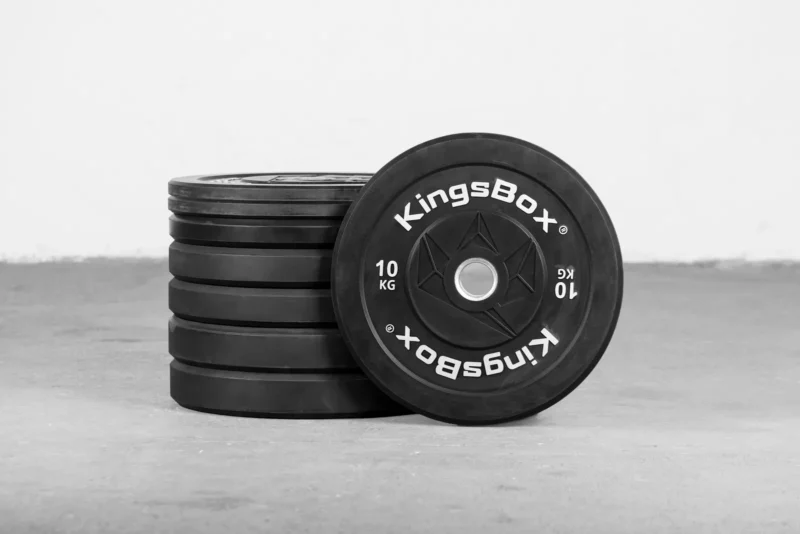
The bumpers complete the work with the balance wheel allowing you to perform dynamic movements in total safety. They are particularly suitable in functional training because they allow you to work on power and speed of execution.
In cycling, the ability to apply force quickly is essential. When an athlete needs to respond to a sudden sprint in the group or pick up the pace on a climb, he or she must be able to produce energy in seconds.
Exercises like power clean, clean pull, and explosive barbell movements help develop this quality.
Medical ball: rotational force and body control
The medicine ball is an often underrated tool, but extremely useful in preparing the cyclist. The bicycle in fact requires a stable body, capable of transferring force from the legs to the handlebars while maintaining control of the position.
Medicine ball exercises improve:
- core stability;
- coordination between upper and lower body;
- explosive capacity;
- control when changing direction.
Exercises like front throws, torso rotations, and overhead slams are perfect for building a more complete athlete.
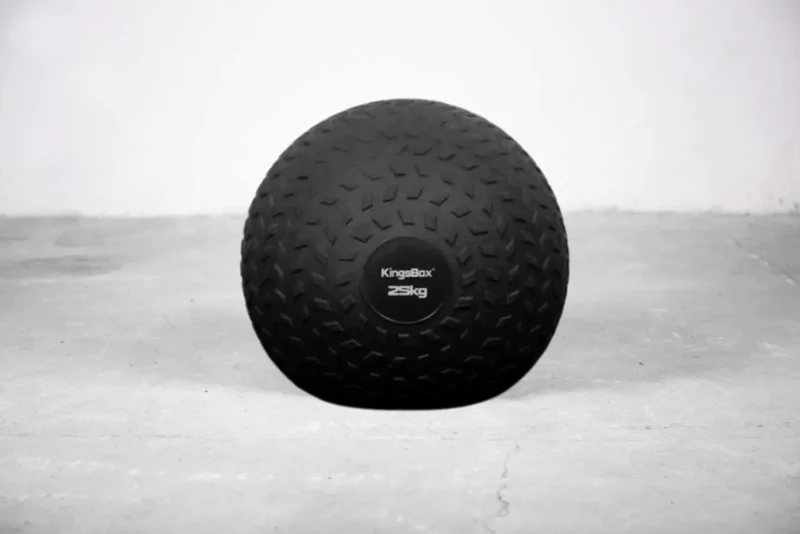
Slam Ball: Power and High-Intensity Conditioning
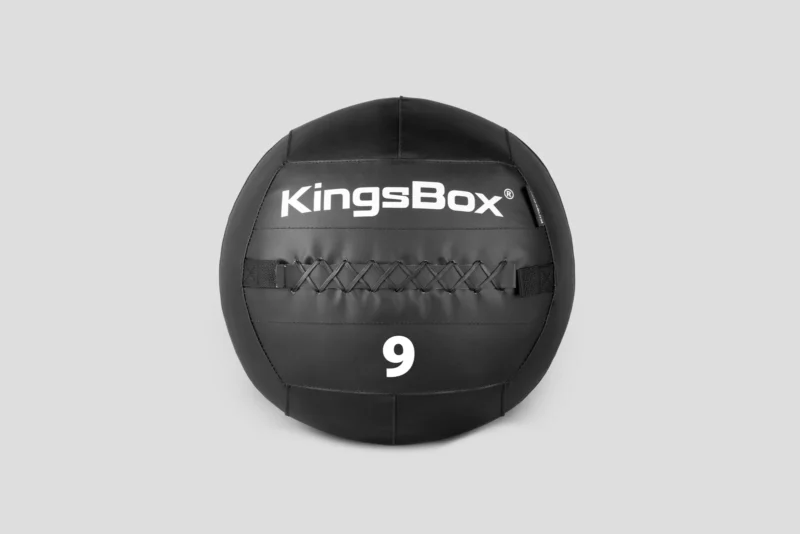
The Slam Ball is ideal for inserting moments of high intensity into your training. Slams require a full body explosion, involving the legs, abdomen, back, and shoulders.
This type of work reproduces very well the energy demands of modern cycling, where the rider must alternate long periods of constant pace with short but very intense efforts.
An example of a circuit:
- 15 Slam Ball;
- 500 meters at the rower;
- 15 kettlebell swing;
- 10 box jumps.
Repeated for 4-5 rounds, this workout simultaneously develops strength and cardiovascular capacity.
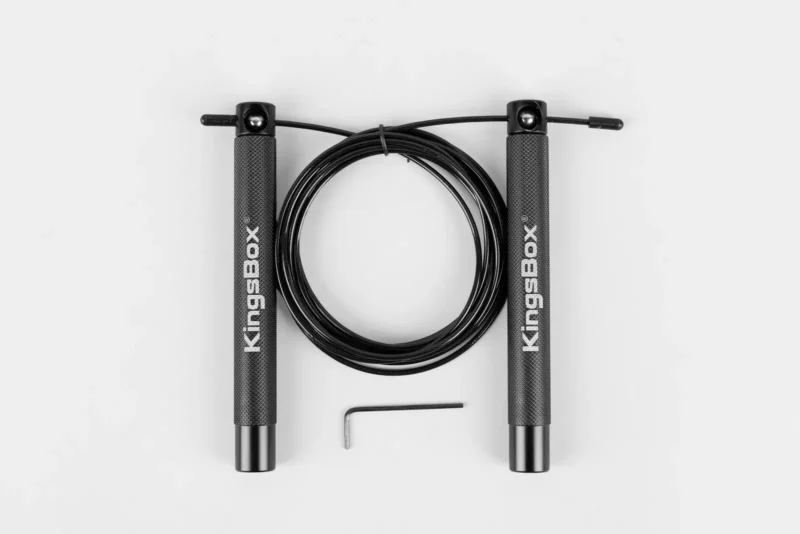
Jumping rope: coordination and endurance
The jump rope is one of the simplest but also most effective tools for improving coordination and endurance. It allows you to increase your heart rate quickly and develop muscle elasticity.
For the cyclist it is particularly useful because it improves the pace, the responsiveness of the feet and the ability to maintain high neuromuscular efficiency.
It can be used:
- in the warm-up before the session;
- in high intensity circuits;
- as metabolic work on days without a bicycle.
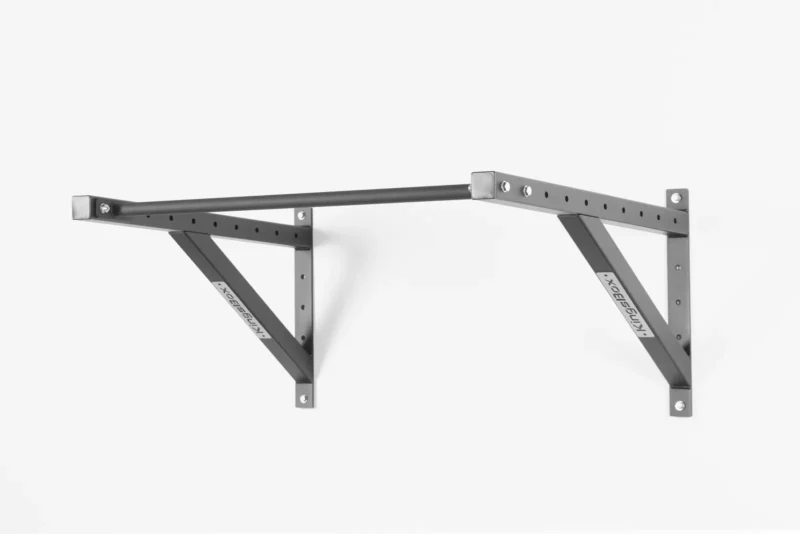
Traction Bar: A Strong Back for Better Pedaling
Cycling is often considered a leg-only sport, but a strong upper body is essential to maintaining a correct position on the bike.
The pull-up bar allows you to develop your lats, arms and shoulders, improving trunk stability and reducing fatigue during longer outings.
Pull-ups also help compensate for the closed posture typical of cycling, where the body remains tilted forward for many hours.
Plyometric Box: Explosiveness and Reactivity
Plyometrics is an important component of modern athletic preparation. Box jumps improve the nervous system’s ability to quickly activate muscles.
This quality is crucial when the cyclist has to change pace suddenly or face a sprint.
The main exercises are:
- Box jump;
- Lateral jumps;
- Explosive step ups;
- Burpee box jump.
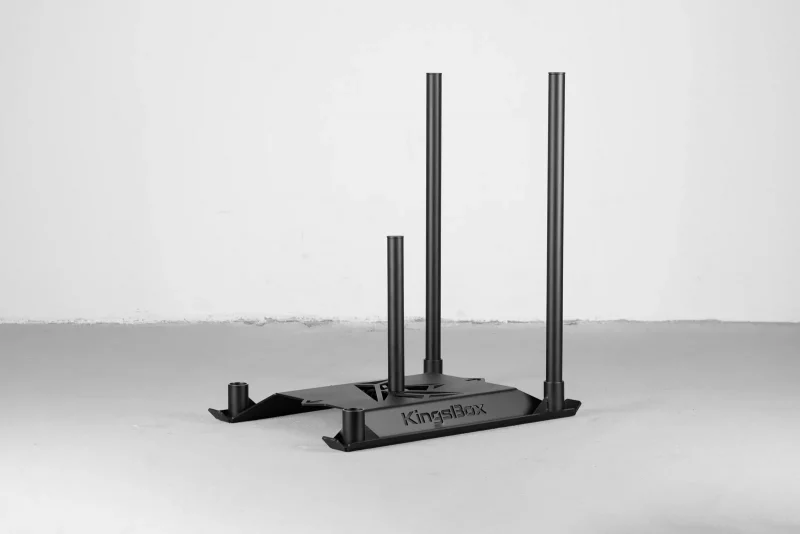
Sled – Sled: Power Athletes’ Favorite Job
The KingsBox sled is one of the most comprehensive tools for building functional force. The sled’s thrust allows you to train your legs, core, and cardiovascular capacity without the need for extremely high loads.
The movement strongly recalls the capacity required during a challenging climb: producing continuous force while maintaining high intensity.
The main advantages of sled training are:
- increased leg strength;
- improved muscle endurance;
- increase in anaerobic capacity;
- complete training without complex movements.
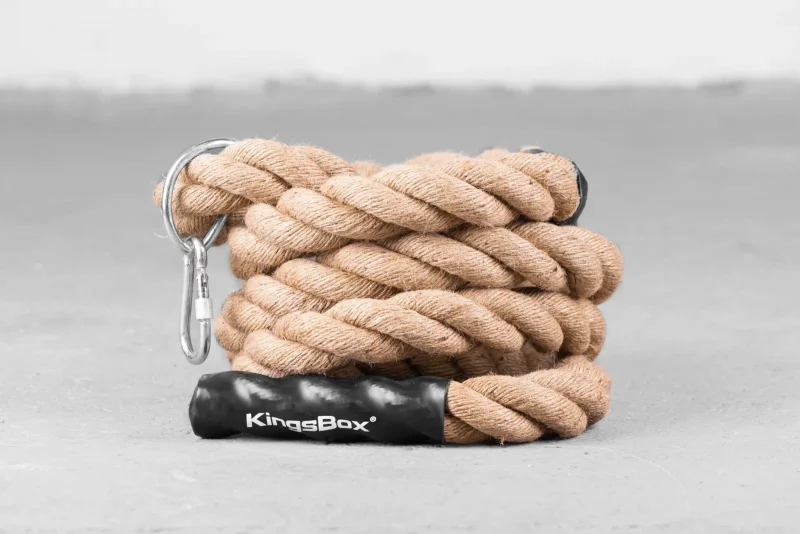
The Rope – Sled Rope: Total Body Strength
The sled rope completes the job by allowing towing exercises that involve virtually all the muscles. The cyclist must maintain a stable body while producing force with legs and arms.
This type of exercise improves trunk control, grip, and overall endurance, qualities that are also useful in long competitions.
Rower

Dumbbells
Kettlebell
Barbell
Bumpers discs
Medical ball
Slam Ball
Jumping rope
Traction Bar
Plyometric box

Sled – Sled
The Rope – Sled rope
A sample weekly program for cyclists
Balanced preparation could include two strength sessions in the gym combined with cycling outings.
Day 1 – Strength:
- Squat with 5 series barbell;
- Romanian deadlift 4 series;
- Dumbbell lunges;
- Pull-up shots;
- Core training.
Day 2 – Conditioning:
- Rower;
- Kettlebell swing;
- Slam Ball;
- Box jump;
- Sled push and sled pull.
This approach allows us to build a complete athlete, capable of meeting the demands of modern cycling without sacrificing the endurance necessary to stay in the group.
How to organize your preparation throughout the year
A common mistake among amateur cyclists is to always train the same way throughout the year. The ideal preparation must instead follow a progressive schedule, adapting work in the gym and cycling according to the time of the season.
An effective approach divides the year into three main phases: strength building period, power development period, and competitive maintenance period.
Winter Period: Building the Force Base
During the months away from competition the gym can take on a central role. At this stage, the main goal is to increase overall strength, improve mobility, and correct any muscle imbalances.
The cyclist can dedicate two or three weekly sessions to training with barbells, dumbbells and kettlebells, working with progressive loads and controlled movements.
The most important exercises at this stage are:
- barbell squat;
- deadlifts;
- hip thrust;
- dumbbell lunges;
- pull-ups;
- core stability work.
The goal is not to simply increase body weight, but to create stronger, more efficient muscles that can better transform strength into power on the pedals.
Pre-season period: transforming strength into power
As the start of the races approaches, the work changes. The force built in previous months must be transformed into an explosive and cycling-specific capability.
At this stage, dynamic exercises with kettlebells, plyometric boxes, medicine balls, slam balls and sleds become essential.
The cyclist must learn to produce force quickly, because in races decisive situations often last a few seconds: a steep climb, a change of pace or a final sprint.
Examples of exercises:
- explosive kettlebell swings;
- box jump;
- medicine ball throws;
- sled pushes;
- high intensity circuits.
Competitive period: maintain performance
During the racing season, the priority becomes to recover energy and maintain the improvements achieved. Gym workouts decrease in volume but remain essential for maintaining strength and preventing injuries.
One or two short weekly sessions may be sufficient, favoring quality exercises and functional circuits.
The goal is not to arrive at the race tired, but to maintain a strong and responsive body.
How to combine gym and bike during the week
Programming must take into account the total training volume. Adding a gym without any criteria can lead to excessive fatigue, while inserting it correctly allows for improved performance.
An example for an advanced amateur cyclist might be:
- Monday: recovery or mobility;
- Tuesday: barbell and dumbbell strength training;
- Wednesday: bike ride with intensity work;
- Thursday: conditioning with rower, kettlebell and sled;
- Friday: active recovery;
- Saturday: long bike ride;
- Sunday: light or technical aerobic work.
The ideal combination depends on the athlete’s level, goals, and race schedule, but the principle remains the same: building a body capable of supporting work on the bike.
The most common mistakes in cyclist preparation
Train only the resistance
Many cyclists spend hundreds of hours in the saddle but completely neglect strength. This can limit performance improvement and increase the risk of muscle problems.
Use only gym machines
Machines can be useful, but functional tools like barbells, kettlebells, and dumbbells allow for more complete work because they also involve stabilizing muscles and coordination.
Making too much volume without recovery
Effective training arises from the balance between stimulus and recovery. Continuously increasing miles and hours of training without proper management can lead to decreased performance.
Neglect the core
A strong and stable abdomen is essential for transferring energy from the leg muscles to the bicycle. A weak core often leads to a loss of efficiency and increased fatigue in the lumbar region.
Why KingsBox equipment is ideal for cycling preparation
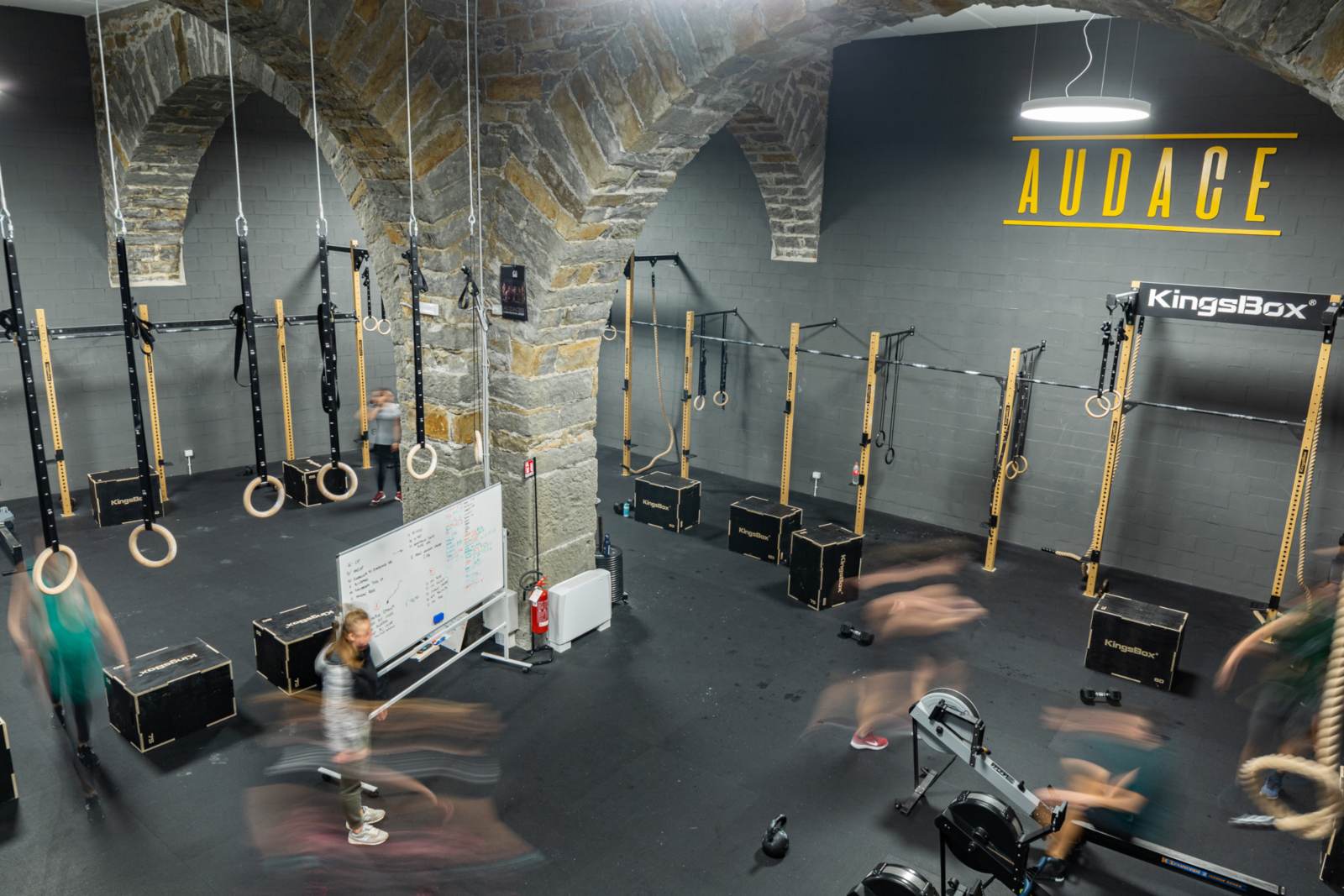
The modern preparation of the cyclist requires versatile tools, resistant and capable of adapting to different types of training. The KingsBox equipment allows you to create a real performance area where you can develop strength, power and endurance with functional exercises.
With a targeted investment, it is possible to create a complete gym using:
- balance sheets and bumpers for strength;
- kettlebells and dumbbells for functional work;
- conditioning rower;
- plyometric box for explosiveness;
- pull-up bar for superior stability;
- sled and The Rope for resisting force.
This combination allows you to train all the characteristics that make the difference when cycling in groups or facing challenging competitions.
FAQ: Athletic training for cyclists
Does a cyclist have to weight train?
Yes. Strength training improves the ability to produce power, increases pedaling efficiency, and helps prevent injuries. However, it must be properly programmed in conjunction with bike training.
How many times a week do you have to go to the gym?
For most cyclists, two weekly sessions are enough to achieve great benefits. More advanced athletes can modulate work according to season and goals.
Does working with a barbell make you gain too much weight?
No, if programmed correctly. The goal for a cyclist is to increase relative strength, that is, to become stronger without adding unnecessary mass.
What is the best tool to improve endurance?
Rowing machines, kettlebells, sleds, and high-intensity circuits are very effective tools for developing cardiovascular fitness and muscular endurance.
Can I also get ready for cycling at a home gym?
Yes. With a smart selection of KingsBox equipment, you can create a complete home gym to train strength, power and conditioning without the need for large spaces.
Cycling events where peloton makes the difference
The peloton is not a race, but the tactical heart of road cycling. Within the group, strategies, speed and decisive moments of the competition are decided. The great international races are the best example of how strength, endurance and the ability to work as a team are fundamental to emerging.
Tour de France
The Tour de France is the most famous cycling event in the world. For three weeks, the best riders tackle mountains, time trials and flat stages where peloton control becomes crucial. Teams protect their leaders, manage the pace of the group, and prepare decisive attacks.
Tour of Italy
The Corsa Rosa represents one of the toughest challenges in professional cycling. The peloton faces great climbs, climate changes and technical routes where the ability to recover quickly becomes decisive.
The Vuelta a España
The Spanish race is famous for its short, intense climbs. In peloton, athletes must be ready for continuous changes of pace and sudden attacks, characteristics that require great power and anaerobic capacity.
Monument Classics
The great classics such as Milan-San Remo, Paris-Roubaix, Tour of Flanders and Liège-Bastogne-Liège are events where positioning in the peloton can decide the result. Peacocks, wind, continuous climbs and accelerations test strength and endurance.
World Road Cycling Championships
The World Cup is one of the most tactical races of the year. National teams work inside the peloton to get their captain in top condition until the final.
Conclusion: Building a stronger cyclist with KingsBox
Riding in the peloton requires much more than just endurance. It means being ready to react, accelerate, keep pace and manage fatigue in the most difficult situations.
The integration of cycling and functional training allows us to develop a complete athlete, capable of expressing more power and approaching each race with greater confidence.
KingsBox equipment offers all the tools you need to build modern preparation: strength with barbells and discs, explosiveness with boxes and medicine balls, endurance with rowing machines and sleds, body control with kettlebells and pull-up bar.
Whether the goal is to participate in the first granfondo, improve your personal best, or compete at a high level, structured preparation in the gym can become the true competitive advantage for every cyclist.